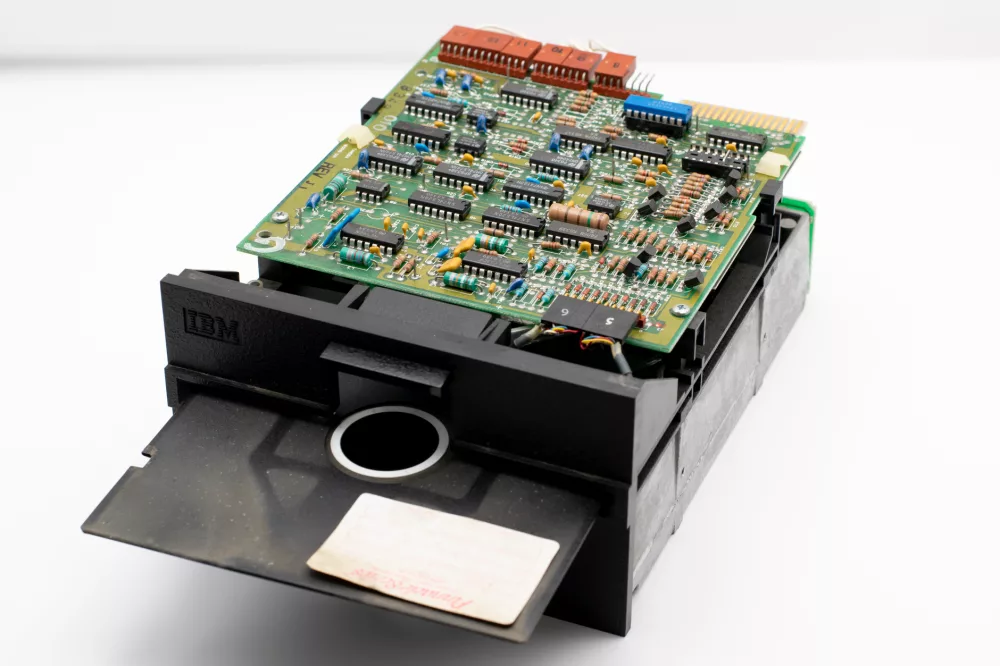
When we talk about the history of personal computing, IBM's name inevitably comes up, and for good reason. They've been pioneers in so many areas, and their venture into the laptop market truly left an indelible mark. It's a story of innovation, professional-grade reliability, and a design philosophy that, frankly, still resonates with many of us today, even decades after their direct involvement in the PC business ended. I'm excited to share my thoughts on why these machines captivated so many.
The Birth of an Icon: The ThinkPad Era
IBM wasn't just another company throwing a laptop into the mix; they brought a level of engineering and foresight that was quite unmatched at the time. Their entry into the portable computer market wasn't about flashy consumer gadgets. Oh no, it was about serious tools for serious work. The true cornerstone of IBM's laptop legacy, without a doubt, is the ThinkPad line. Introduced in 1992, the original IBM ThinkPad 700C wasn't just a laptop; it was a statement. I remember seeing these machines and being genuinely impressed by their robust build and unique features. What an introduction!
Innovative Design and Unmatched Functionality
Let's talk about what made the early ThinkPads stand out. For me, it wasn't just one thing, but a combination of thoughtful design choices:
- The TrackPoint: This little red nub on the keyboard, nestled between the G, H, and B keys, was revolutionary. It allowed users to navigate the cursor without taking their hands off the home row. It's a feature that became synonymous with ThinkPads, and honestly, some of us still swear by it over touchpads.
- Industrial Design: The matte black finish, the sturdy 'clamshell' design – it wasn't about being pretty, it was about being purposeful. These machines looked like they meant business, and they certainly performed like it. This aesthetic was born from inspiration by the traditional Japanese bento box, which is just brilliant when you think about it.
- Build Quality: IBM ThinkPads were built like tanks. I mean that. They were designed to withstand the rigors of travel and everyday professional use. We're talking about magnesium alloy frames, spill-resistant keyboards, and hinges that felt like they could last forever. Durability wasn't an option; it was a core tenet.
They weren't afraid to innovate, and that's what made them so special. IBM truly focused on the professional user, someone who needed a reliable machine that wouldn't let them down in a crunch.
The Evolution of a Workhorse: Key ThinkPad Series
Over the years, the ThinkPad line expanded, catering to various professional needs, but always retaining that core IBM DNA of reliability and performance. I recall a few series that particularly defined the brand before its transition:
The T Series: The Gold Standard for Business
The T series, like models such as the T40, T42, and later T60, became the quintessential business laptop. They struck a fantastic balance between performance, portability, and those legendary ThinkPad features. Many IT departments worldwide standardized on these machines, and for good reason. They were often praised for their incredible keyboards, which, even today, set a high bar for laptop typing experiences. I've spent countless hours on those keyboards, and my fingers still miss them sometimes.
The X Series: Ultraportable Power
For those who needed extreme portability without sacrificing too much power, the X series was the answer. Think of models like the X20, X41, or the X60. These were lightweight, often featuring smaller screens, but still packed the punch needed for mobile professionals. They exemplified how much robust performance could be squeezed into such a compact form factor. They felt like you could just toss 'em in a bag and go, which was a big deal then.
Other Notable Lines
We also saw the R series, which offered a more budget-friendly yet still robust option, and the A series, which focused on high-performance mobile workstations. Each series had its distinct personality but shared that underlying commitment to quality and user experience that IBM championed. It wasn't just about selling a product; it felt like they were providing a reliable partner for your work.
Why IBM Sold Its PC Division: A Strategic Shift
It's natural to wonder, if IBM laptops were so great, why did IBM sell its PC division to Lenovo in 2005? From my perspective, it really boiled down to a strategic refocusing. IBM, as a company, was increasingly shifting its focus towards enterprise solutions, software, and services – areas with higher profit margins and less competitive pressure than the consumer and commercial PC market. Selling the PC division allowed them to concentrate their resources on these core competencies. For Lenovo, it was a golden opportunity to instantly gain a globally recognized, premium brand and expand its reach into Western markets. It was a huge move for both companies, and honestly, it worked out pretty well for everyone involved.
The Enduring Influence and Collectibility
Even though IBM hasn't directly produced laptops for years, their influence is still very much alive. Lenovo has done a commendable job of maintaining the ThinkPad's core identity, but many enthusiasts, myself included, still have a soft spot for the 'original' IBM ThinkPads. You'll find active communities dedicated to refurbishing, upgrading, and even 'modding' older IBM ThinkPads. People love them for their:
- Unmatched Keyboard Feel: Truly, the best.
- Robust Construction: They just don't quit.
- Classic Aesthetic: That black, utilitarian look is timeless.
- Moddability: Many components are still easily replaceable or upgradable.
It speaks volumes that these machines, some of them nearly two decades old, are still sought after and used by people who appreciate their design and reliability. They're not just old computers; they're pieces of computing history that still offer practical utility. For me, they represent a high point in laptop design where function absolutely dictated form, and the result was something truly beautiful in its practicality.
So, when I look back at IBM's journey with laptops, I see a clear path of pioneering spirit and an unwavering commitment to quality. Their ThinkPads weren't just products; they were benchmarks, setting standards that many manufacturers still strive to meet. It's a legacy that continues to inspire and inform the design of professional computing devices today.